
Securing your physical space: two simple accessories to better protect your digital life
When we talk about cybersecurity, we often think of passwords, antivirus software or phishing emails. Yet security also involves our physical environment: our desk, our bag, our wallet, our computer and the objects we use every day. Visual access to a camera, a bank card stored in a wallet or a computer left unattended can also represent risks. In this article, we present two simple but useful accessories to strengthen your everyday security: the camera cover and the RFID protection card.

1. Protect your privacy with a camera cover
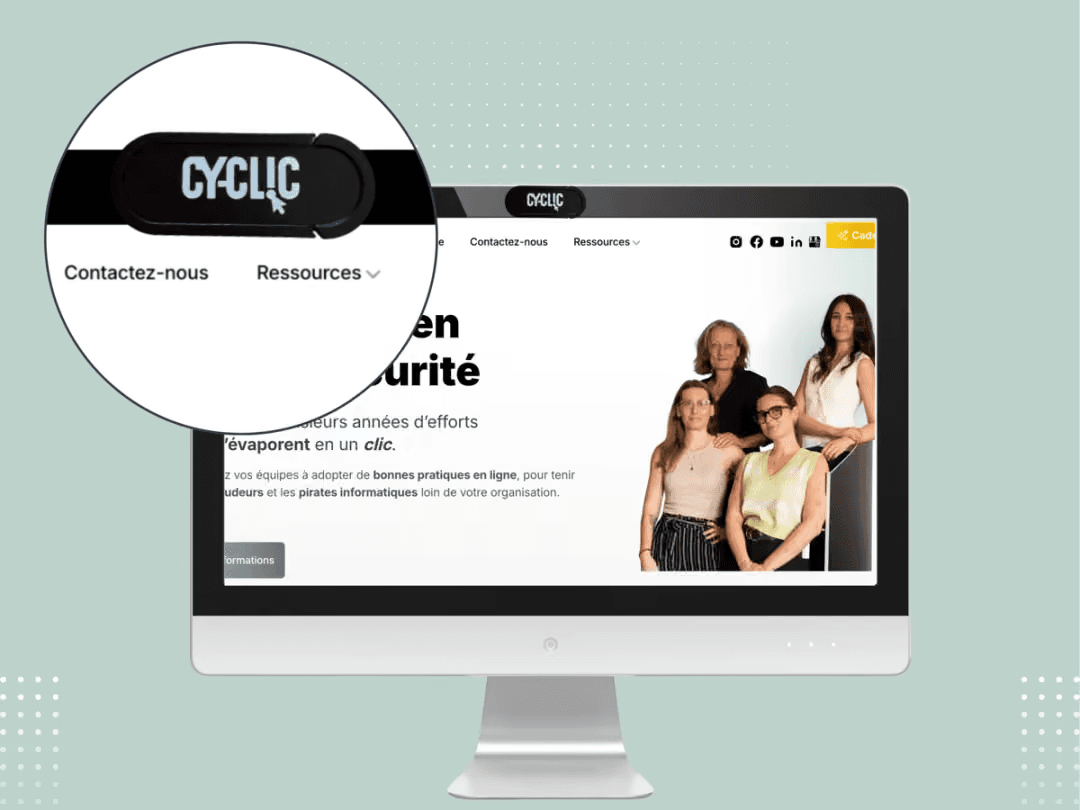
Your computer camera may seem harmless, but it gives access to a very intimate space: your personal or professional environment.
Even if the risks of unauthorized activation of a camera are not always visible, it is better to adopt a preventive approach. A camera cover lets you physically cover the lens when it is not in use. It is a simple gesture that reduces the risk of unintentional exposure, whether at home, at the office, in a coworking space or while traveling.
Some computers display a small light or a colored dot when the camera is active. This is a good indicator, but you should not rely on it alone. Depending on the devices, the settings or the software used, it is possible that the indicator is not enough on its own to guarantee that the camera is indeed disabled. The camera cover therefore adds a simple physical protection: when the lens is covered, you keep better control over what can be seen.
The camera cover is also useful for avoiding everyday awkward moments: joining a virtual meeting too quickly, activating your camera by mistake or forgetting that an application still has access to the image. By covering the camera, you add a concrete layer of protection that is easy to adopt.
2. Reduce the risks of nearby reading with an RFID card
More and more of the cards we use every day work with contactless technology: bank cards, credit cards, access cards, transit cards, student or professional cards, and so on.
This technology is convenient because it allows certain information to be transmitted over a short distance, without having to insert the card into a terminal. However, like any technology that facilitates access, it also deserves to be framed by good security reflexes.
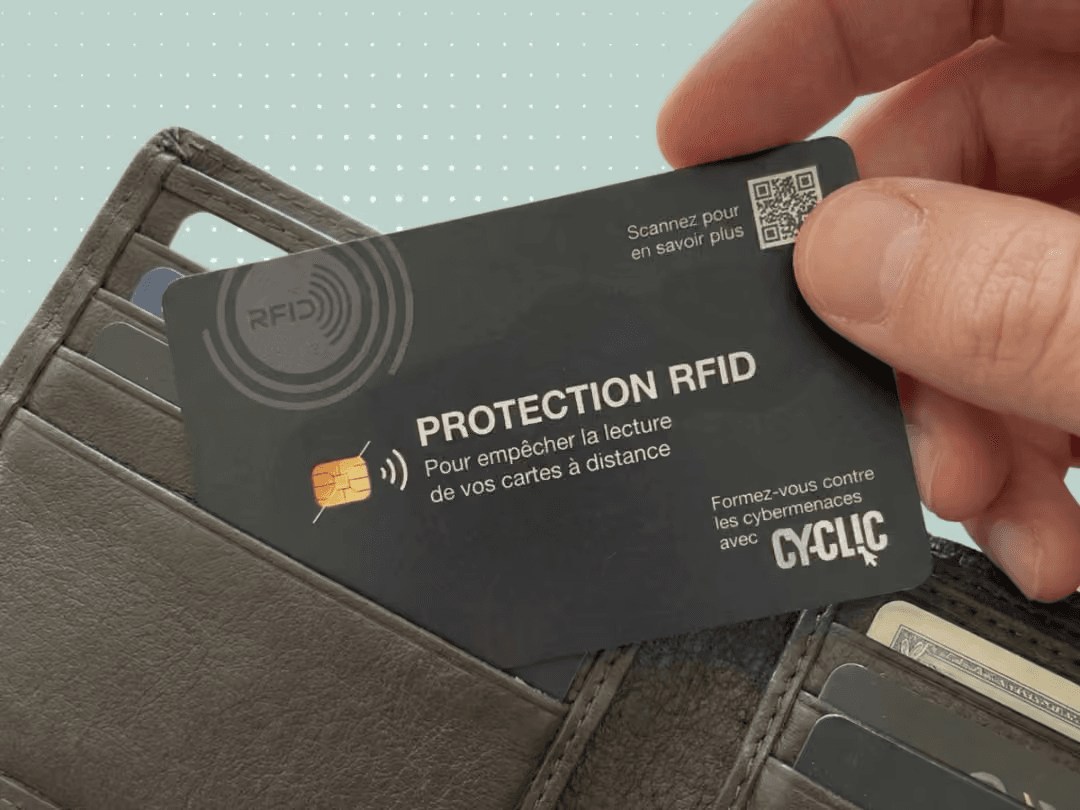
An RFID protection card lets you add a layer of physical protection in your wallet. Placed near your contactless cards, it helps reduce the risks of unwanted reading nearby. The goal is not to create a feeling of fear, but rather to remind us that a wallet often contains several important forms of access: payment methods, identification cards, cards granting access to a building or an office, and so on.
Some wallets already include RFID protection. In that case, adding a protection card may be less necessary. However, if your wallet does not offer this protection, or if you use a very simple card holder, an RFID card can be a practical, compact option that is easy to integrate into your habits.
It is not a magic solution, but it is a good physical protection reflex. As with several cybersecurity measures, the goal is to add an extra layer of security. The more we reduce the opportunities for unauthorized access, the more we limit the risks.
It is important to point out that an RFID card does not replace vigilance. It does not protect against all types of fraud related to bank cards, such as wallet theft, phishing, fake payment sites or the compromise of an online account. However, it can reduce certain physical risks related to contactless cards when they are stored in a wallet.
3. Adopt small security gestures in your daily life
Cybersecurity does not rely solely on digital tools. It also depends on our physical habits and on the way we use our devices every day.
Here are a few simple examples:
- lock your computer when you step away
- avoid leaving sensitive documents in view
- store your cards and devices in a secure place
- cover your computer camera when it is not in use
- pay attention to the orientation of your phone during video calls or when taking photos
- check the permissions granted to applications that use the camera or the microphone
- protect your wallet against nearby reading
- avoid working on sensitive information in public places
- watch out for prying eyes on public transit, in cafés or in shared spaces
These gestures may seem small, but they contribute to a broader security culture. Protecting your physical space also means protecting your personal information, your professional access and sometimes even that of your organization.
Here then are our 2 simple accessories and several good reflexes to better secure your physical space and protect your digital life every day. The camera cover and the RFID protection card do not replace good cybersecurity practices, but they add a concrete layer of protection that is accessible and easy to adopt. In security, it is often the small, repeated gestures that make a big difference.
To discover our promotional items, visit our online store: boutique.cy-clic.com.
WHO ARE WE?
Our mission is to train companies to adopt better online practices, to push back fraudsters and hackers, and to prevent so many years of effort from evaporating in a single click!
When we think about cybersecurity, we think about technologies and infrastructures. Why do we forget that the user plays a role in 90% of attacks and scams? We specialize in corporate cybersecurity training and fraud prevention.
For more information, visit our Training section.