
5 Essential Things to Understand About Encryption to Protect Your Organization's Data
The IT world talks very often about data encryption. But concretely, what does it mean for an organization, its teams, and the information it handles daily? Behind this sometimes technical-sounding term lies a fundamental principle of cybersecurity, accessible to everyone when properly explained. Today, let's take the time to demystify encryption, with concrete examples and simple analogies, to better understand why it plays a key role in fraud prevention.

1. What Exactly Is Encryption?
Encryption involves transforming readable information into an unreadable format, incomprehensible to any unauthorized person. In other words, even if someone gets their hands on your data, they won't be able to do anything with it without the appropriate key.
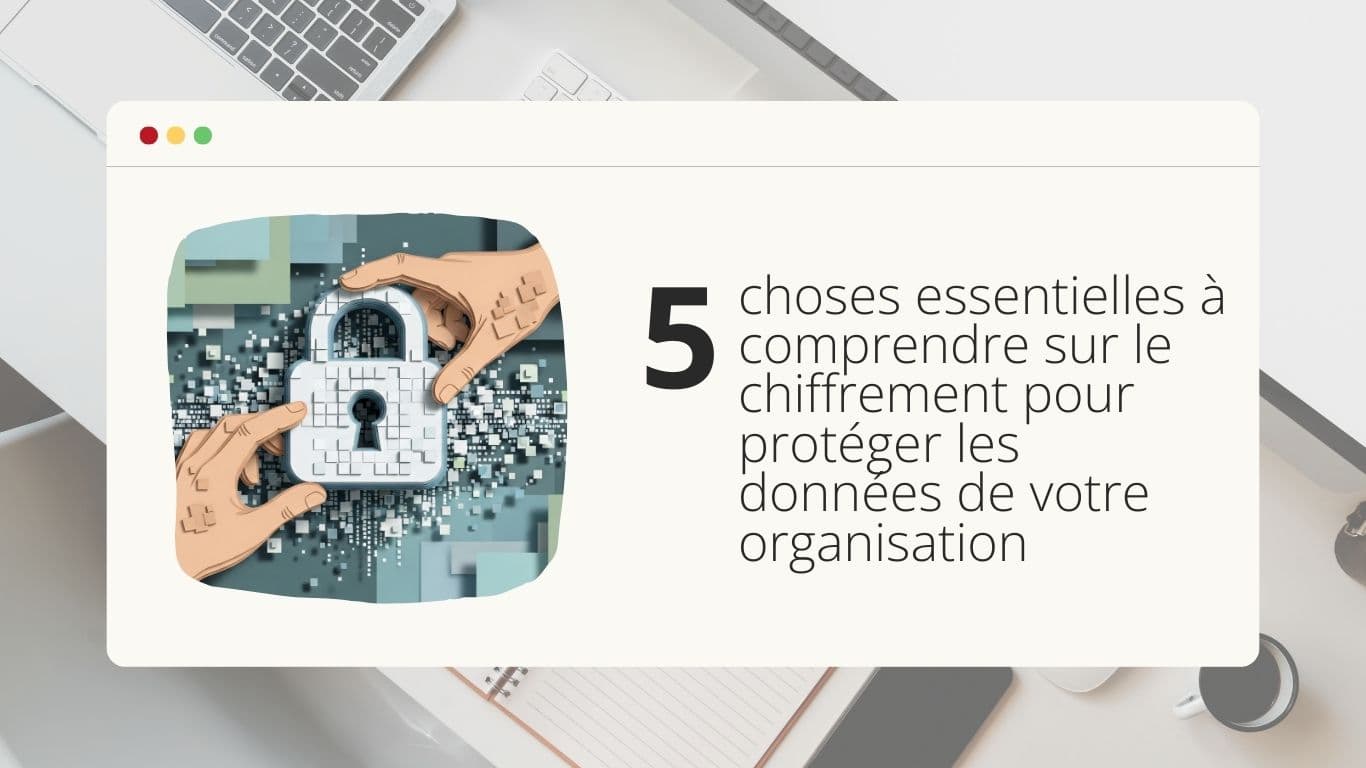
Think of it as a digital padlock placed on your sensitive information. The document is still there, it sometimes even travels across the Internet, but it remains unusable without the right key to open it.
2. An Analogy for Better Understanding: Alice and the Secure Tunnel
You probably know Alice in Wonderland. When Alice leaves the real world to fall into Wonderland, she travels through a long tunnel. Around her, objects swirl, some potentially dangerous. Now imagine that this tunnel is highly secured, as if Alice were wearing invisible armor. Someone could try to grab her, but without succeeding in harming her. Encryption works the same way: data can be intercepted, but it remains protected because its content is rendered unusable without authorization.
3. The Key Role of the Key
At the heart of encryption lies a key, often a password or a cryptographic mechanism. This key transforms data into what is called ciphertext — a string of incomprehensible characters. Only people with the right key can unlock the information and make it readable again. It's exactly like a lock that only opens with the corresponding key. Without this key, even an intercepted email or stolen file remains perfectly useless.
4. Three Concrete Situations Where Encryption Is Essential
- Online Transactions
When you make an online payment or check your bank account, encryption protects your financial data. The small padlock in the address bar (HTTPS) is not decorative: it guarantees that the transmitted information cannot be read by third parties.
- Private Communications
Applications like WhatsApp or Signal use end-to-end encryption. This means that only the sender and recipient can read the messages — even the service provider doesn't have access. A crucial element for preserving the confidentiality of professional exchanges.
- File and Email Protection
Encryption also allows you to lock documents stored on a computer or in the Cloud. It is particularly useful when sending emails containing sensitive information: contracts, personal data, financial documents. Tools like 7-Zip, for example, allow you to encrypt attachments with a password. Even if the email is intercepted, its content remains unreadable without the key.
5. Encryption as a Pillar of Fraud Prevention
Many frauds rely on access to confidential data: banking information, credentials, internal documents. Encryption then acts as an additional security barrier, significantly reducing the impact of interception or human error. And that's also what fraud prevention is about! But teams still need to understand when, how, and with which tools to use encryption in their daily practices.
Training to Better Protect
Encryption is not reserved for IT specialists. It becomes truly effective when it is well understood and properly used by everyone who handles sensitive data within an organization.
Need help? We can help you with our cybersecurity training tailored to the specific needs of your organization. Our training programs cover encryption, digital best practices, securing communications, and fraud prevention in a concrete and accessible way. Because in cybersecurity, technology is essential, but human understanding is equally important.
WHO ARE WE?
Our mission is to train businesses to adopt better online practices, to repel fraudsters and hackers, and to prevent years of hard work from vanishing with a single click!
When we think of cybersecurity, we think of technologies and infrastructure. Why do we forget that users play a role in 90% of attacks and scams? We specialize in corporate cybersecurity training and fraud prevention.
For more information, visit our Training section.