
Reducing Your Digital Carbon Footprint: 5 Practical Tips to Adopt
Nowadays, the digital sphere is expanding considerably, infiltrating every aspect of our routine, whether for work, entertainment, information, or communication. However, this growing usage comes at a cost and generates a form of digital pollution, an environmental issue often underestimated but increasingly concerning.

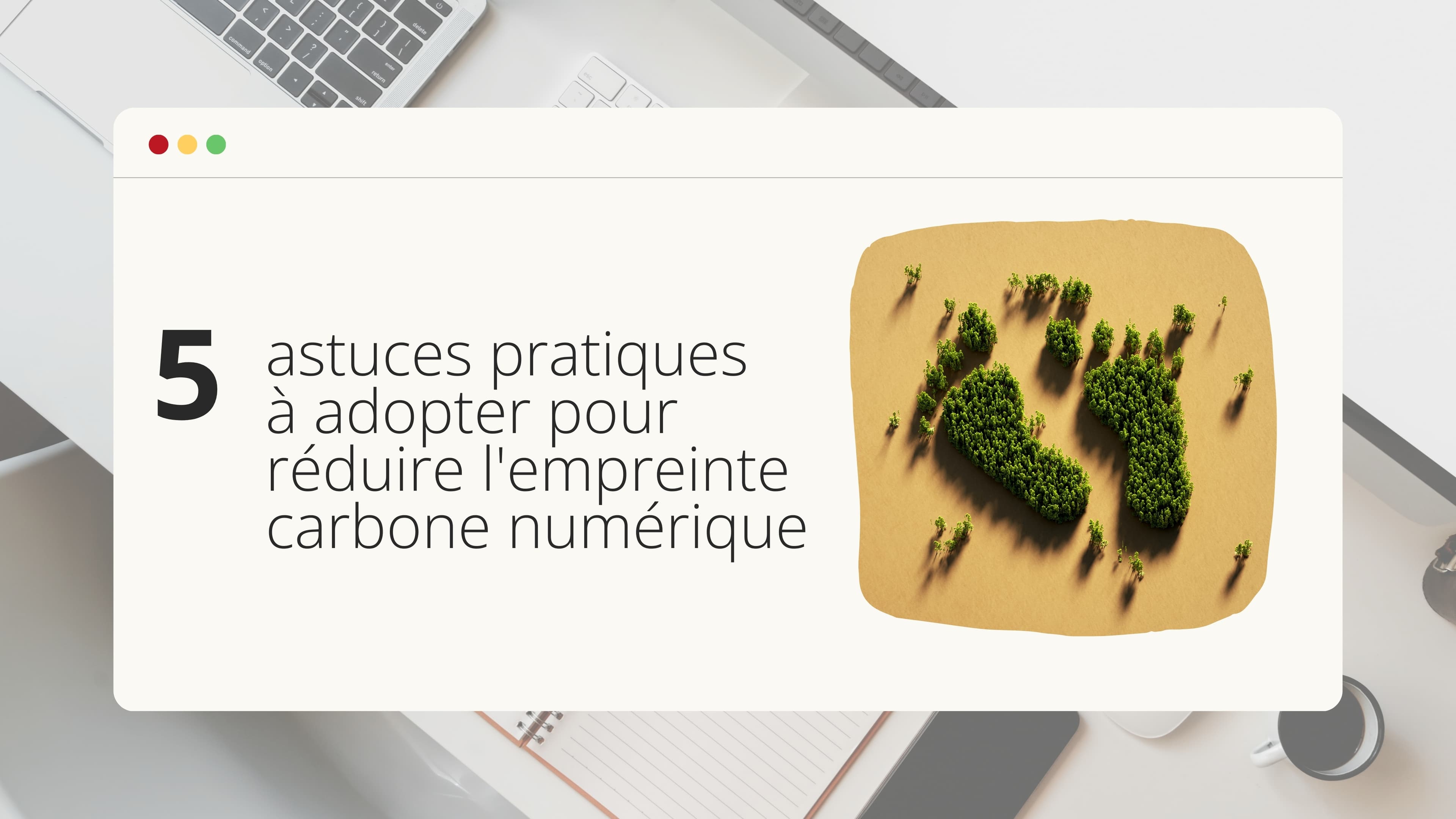
Digital pollution, sometimes referred to as the "digital carbon footprint," encompasses all the ecological impacts and repercussions arising from our online activities. The goal is to limit greenhouse gas emissions and opt for more eco-responsible habits. Let's take stock!
Here are 5 ingenious digital strategies to limit your carbon footprint, reduce digital pollution in your life, and be more responsible.
1. Optimize the Impact of Your Email Usage
Every email sent has an ecological cost. It is possible to reduce digital pollution by avoiding sending unnecessary or bulky emails. Favor direct communications and the use of instant messaging platforms when possible. Also consider unsubscribing from newsletters you no longer need. It takes some management, but it helps limit greenhouse gas emissions with every email sent. Think of your inbox as a river: the more cluttered it is, the more it overflows.
2. Turn Off or Put Your Devices and Equipment to Sleep
A device (computer or phone) on standby is like a light bulb left on unnecessarily. Electronic devices on standby continue to consume energy. You can turn them off completely when not in use, or use programmable outlets to manage automatic start-up and shutdown. It's a small gesture of sobriety for you, but a big impact for the environment.
3. Choose Eco-Friendly Cloud Storage Services
Just as green energy exists, some cloud storage services are more environmentally friendly. Indeed, some cloud storage services use data centers powered by renewable energy sources, which allows for lower energy consumption. It would be worth shopping for better providers and better equipment! Also, limit the amount of data you store online by deleting unnecessary files or saving them locally.
4. Adopt Responsible Internet Browsing
The web is a vast forest, but not all paths are green. Use privacy-friendly search engines and configure your browsers to block ads and trackers. Did you know that open tabs also use energy? Each open tab is like a small window left open in winter — it consumes energy.
5. Repair Before Replacing: A Better Practice for the Environment
Before throwing away, think about repairing. When your electronic equipment and devices start to perform poorly, consider repair instead of discarding them. Choose recycled products designed to be repairable and look for authorized repair centers to extend their lifespan. In our consumer society, repair is an act of resistance. Look for durable, recycled, and repairable products. It's an investment for the future.
Here are our 5 simple digital recommendations to put into practice. Adopting these five tips is like planting trees in the digital forest. You can contribute significantly to reducing your carbon footprint and digital pollution. Every small gesture has an impact and counts in preserving our environment while fully enjoying the benefits of modern technology.
Let's be part of the movement for a cleaner and more sustainable digital world!
Need help? We can help you with our corporate cybersecurity training.
WHO ARE WE?
Our mission is to train businesses to adopt better online practices, to repel fraudsters and hackers, and to prevent years of hard work from vanishing with a single click!
When we think of cybersecurity, we think of technologies and infrastructure. Why do we forget that users play a role in 90% of attacks and scams? We specialize in corporate cybersecurity training and fraud prevention.
For more information, visit our Training section.